
By ADRIANA MORGA Associated Press
NEW YORK (AP) — Maybe your car broke down, your computer was stolen, or you had a surprise visit to urgent care. Emergencies are inevitable, but you can prepare to deal with them by building an emergency fund.
“There are so many things that happen in our lives that we don’t expect and most of them require financial means to overcome,” said Miklos Ringbauer, a certified public accountant.
The industry standard is to save three to six months of expenses in an emergency fund. However, this can feel daunting if you live paycheck to paycheck or if you have debt. But if you’re in either of these situations, it’s even more crucial to build a financial safety net that can help you in times of crisis.
“Emergency funds allow you to prevent further debt,” said Jaime Eckels, certified financial planner and wealth management leader for Plante Moran Financial Advisors.
Suppose you’re paying multiple credit cards and other loans. In that case, Rachel Lawrence, head of advice and planning for Monarch Money, a financial planning and budgeting app, recommends that you make the minimum payments while you build your emergency fund. Once you’ve hit an amount that feels right for your lifestyle, you can go back and continue tackling your debt more aggressively.
Whether you want to start an emergency fund or create better habits while you save, here are some expert recommendations:
Start with small milestones
The idea of saving for three to six months’ worth of expenses can be daunting, so it’s best to start with a smaller milestone. Lawrence recommends starting with a goal of saving $1,000, then moving on to save one, three, and six months of expenses.
The way you approach this goal can vary depending on your income and your budget. But starting with small, attainable goals can help you build an emergency fund without feeling financially strained.
“Starting small is okay. Even if it’s $20 right out of your paycheck, those small things can add up,” Eckels said.
She recommends building your emergency fund in a separate account from your regular savings account, ideally a high-yield savings account, which offers a higher interest rate than a traditional savings account.
Decide on the appropriate amount for your life
Knowing how much to save for your emergency fund depends on your life situation. Lawrence suggests you gauge your own financial responsibilities to estimate how much your ideal emergency fund should be.
For single professionals with no significant financial responsibilities, such as a mortgage or a car, the amount might be $2,000 to $3,000. At the same time, people with children and several pets might aim to save for six months’ expenses.
“There’s no one-shoe-fits-all solution. Everybody is different, especially if you have variable expenses on a monthly basis,” Ringbauer said.
Lawrence recommends that self-employed people maintain two emergency funds: one to buffer low-income months and another for true emergencies. To build your buffer account, Lawrence recommends setting aside some money during high-earning months.
“You set that amount aside in your buffer account until you have two or three months of the amount that you want, she said. “Because that way any month where you have less money, you go pull from the buffer and it’s no big deal.”
Automate your savings
Eckels recommends setting up automatic savings as a low-effort way to build your emergency fund.
Scheduling your savings to be withdrawn from your bank account as soon as your paycheck arrives is an effective way to build a savings habit without having to transfer the money manually.
“I always tell people if it was never in your bank account, you never had it, right?” Eckels added.
She also recommends that her clients open a separate account, one that isn’t at the same bank as their checking account, so they aren’t tempted to transfer the money in a non-emergency.
Make it visual
As you’re making progress towards your emergency fund goal, making it visual can help you stay motivated, according to Lawrence.
She recommends getting creative with how you track your progress, ideally with a method that brings you joy.
“You want your brain to get rewarded as often as possible when you’re seeing a bunch of progress,” she said.
Some options to make your progress visual include drawing a thermometer-like tracker and keeping it updated as you advance toward your goal, documenting your progress on a habit-building tracker on your phone, or using a budgeting app with a tracking tool.
Save windfalls
If your budget is really tight and you don’t have much wiggle room to set aside money for an emergency fund, Lawrence recommends saving windfalls.
“Unexpected chunks of money that maybe you weren’t expecting, like tax refunds or getting a third paycheck when you normally get paid twice a month, or a bonus, those are your best ways to make progress when you’re tight otherwise,” said Lawrence.
In general, Lawrence recommends that people keep 10% of their windfall for themselves and the rest for their emergency fund. With that breakdown, you can both save and feel rewarded by the unexpected income.
If you use it, don’t feel guilty
Chances are that an emergency will happen, and when it does, you don’t need to feel guilty for using your emergency fund, Lawrence said. Instead, it’s best to think about how you’ve achieved your goal of building a financial safety net for yourself.
“You wouldn’t feel bad about using your down payment to buy a house, you wouldn’t feel bad about saving for retirement, actually to retire,” Lawrence said.
——
The Associated Press receives support from Charles Schwab Foundation for educational and explanatory reporting to improve financial literacy. The independent foundation is separate from Charles Schwab and Co. Inc. The AP is solely responsible for its journalism.
News
Building an emergency fund can feel daunting, but these tips can help
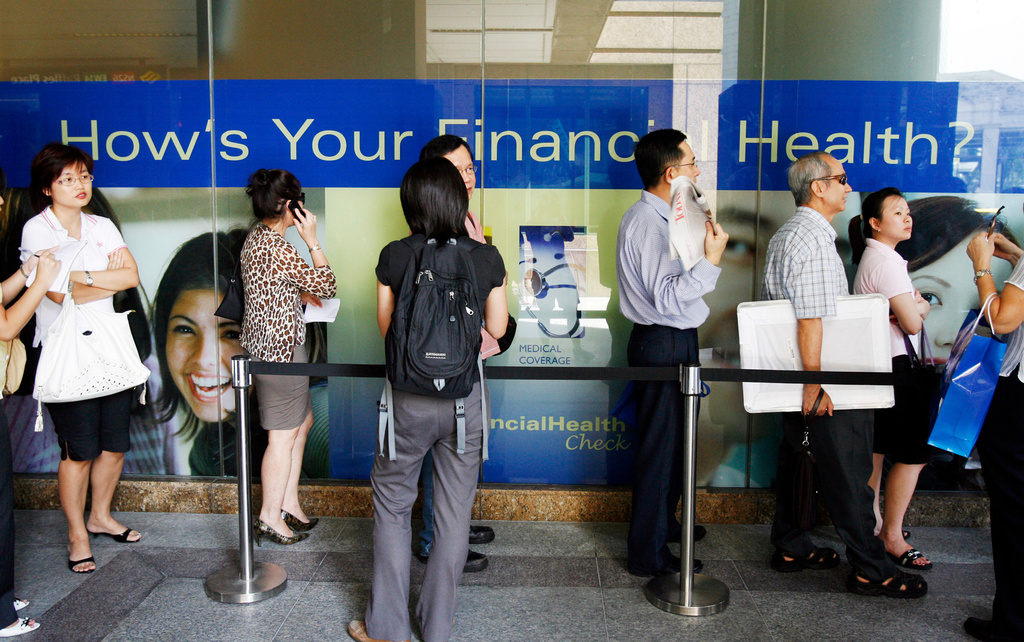
FILE -Customers of American International Assurance (AIA), a wholly owned subsidiary of American Insurance Group (AIG) stand in line outside the AIA office as they wait to speak to customer service officers, and some others seeking advice on terminating their insurance policies on Tuesday Sept. 16, 2008 in Singapore amid fears that that American Insurance Group, the world's largest insurer, was fighting for its survival after downgrades from major credit rating firms, adding pressure as AIG seeks billions of dollars to strengthen its balance sheet.(AP Photo/Wong Maye-E, File) Photo: Associated Press